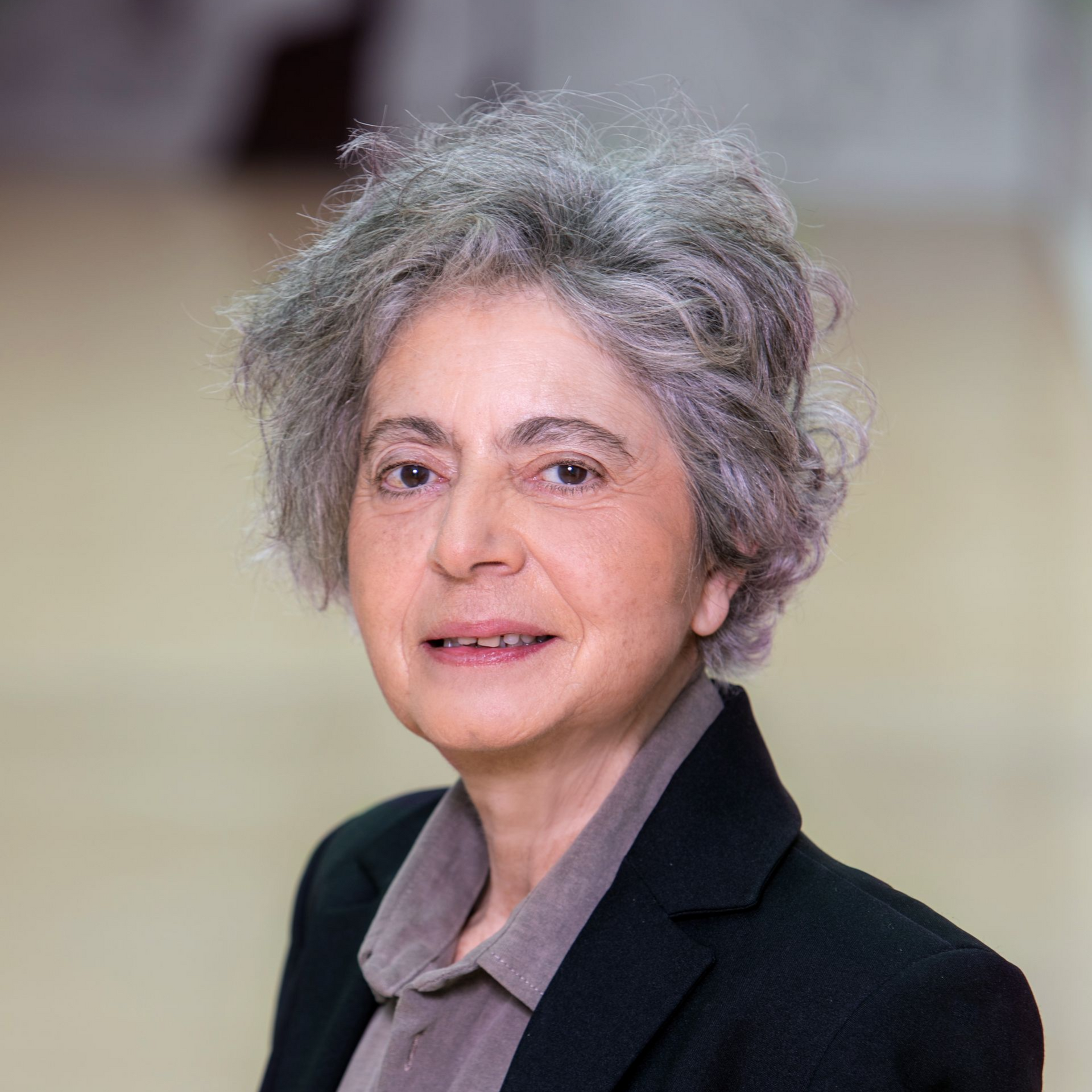
Irit Hemmo
Established Artist
Irit Hemmo is a multidisciplinary artist born in Jerusalem in 1961. She is a graduate of the Midrasha School of Art in Ramat HaSharon and a senior lecturer in the Department of Art at the Bezalel Academy of Arts and Design, Jerusalem. She lives and works in Tel Aviv.
Over more than three decades of artistic practice, Hemmo has engaged with themes of transcription, modern ruins, and ephemeral art. Her work is process-based and mediated, at times using machines and at others relying on chance. She employs industrial, office-related, and temporary materials such as carbon paper, dust, and cut-out photographs of plants. Through these means, Hemmo consistently articulates a critical political and social position, addressing paradoxes inherent in human and artistic existence.
Over the past two decades, Hemmo has focused on Israeli modernism and the visual–cultural transformations it has undergone. Her practice excavates the history of place, examining works associated with socialist realism in early Israeli public art of the 1950s and 1960s – outdoor sculptures, monuments, reliefs, murals, and tapestries created in the shadow of the Zionist ethos.
While engaging directly with this history, Hemmo simultaneously challenges the Western modernist canon that sought to establish itself in Israel, proposing new readings of identity and narrative.
At the center of her solo exhibition, Isaac’s Garden, stands a reduced-scale sculpture garden composed of models of iconic Israeli sculptures, many of them masculine, monolithic, and modernist works from the 1950s – 1970s. Through processes of scaling down and material transformation, the sculptures are detached from their original contexts and rendered partially unrecognizable. The garden is coated in a fine layer of dust using a “dust storm” technique developed by Hemmo, with dust collected from Israeli army landmine-clearing operations. For Hemmo, dust functions as a metaphor for time, erosion, and the collapse of monumental values, while blurring boundaries between public and private memory. Named after her late father, the garden becomes a private memorial assembled from fragments of public history.